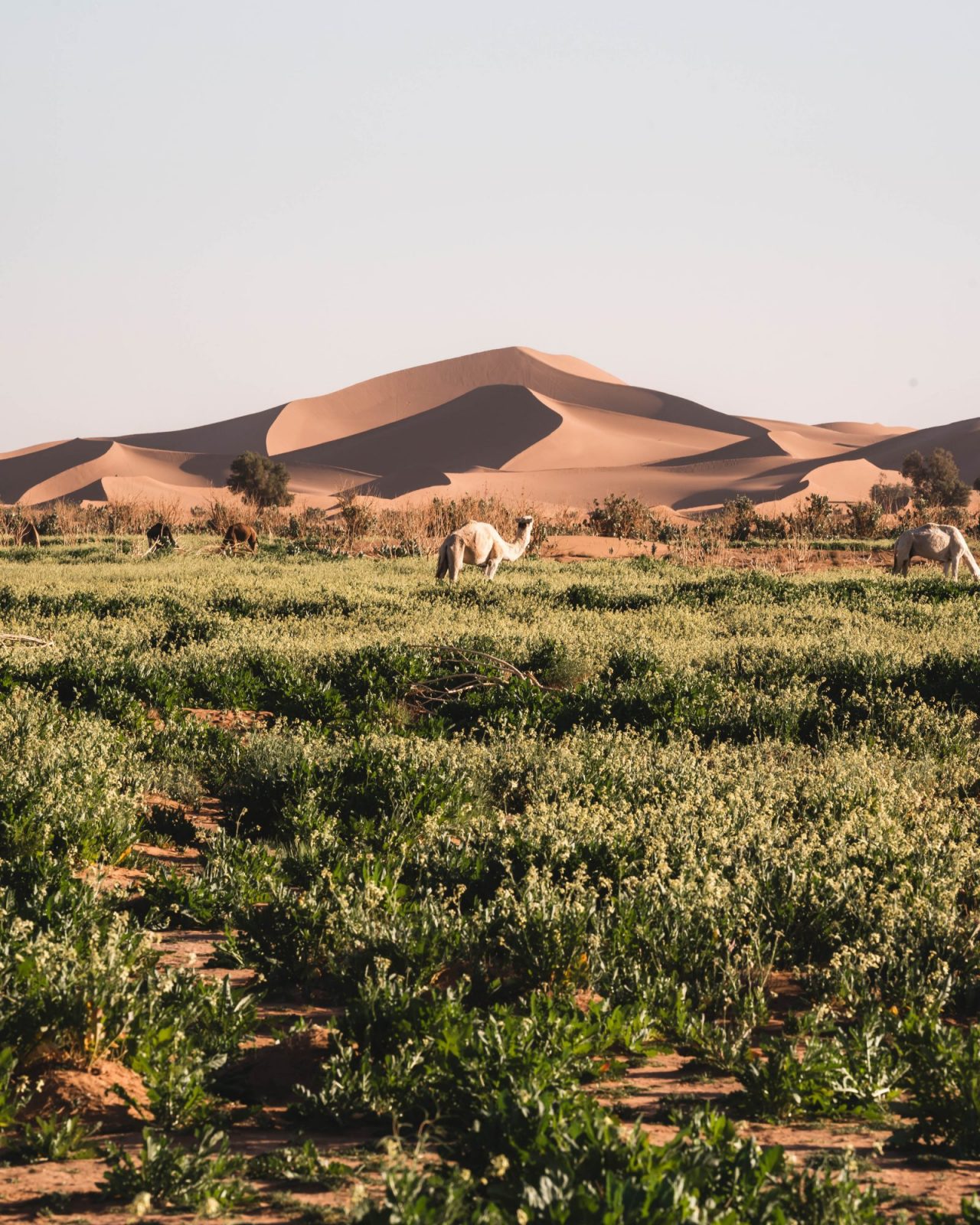
Ethical Camel Trekking in Morocco: Our Commitment to Animal Welfare

Lets talk about ethical camel trekking in Morocco.
The Ancient Bond: Camels and Nomadic Culture
For 3,000 to 5,000 years, nomads and camels have shared a remarkable symbiotic relationship. The domestication of camels by nomadic pastoralists began around the 4th to 3rd millennium BCE, creating a bond particularly strong with Bedouin cultures across the Sahara.
The Moroccan camel is actually a dromedary – a one-humped species that has been fully domesticated for about 4,000 years. Despite this long history of domestication, camels are often described as “semi-domesticated” or “extensively managed” due to their ability to live independently and their unique management in nomadic cultures.
Unlike traditional domestic livestock such as cows or sheep, camels maintain behaviours that reflect their semi-wild nature while still being integral to nomadic life. They’ve carried loads across vast deserts, walked alongside nomadic families, and remained essential to desert survival for millennia.
Camel caravans facilitated trade between North Africa and the sub-Saharan regions, carrying goods such as salt, spices, textiles and gold across the desert.
The Challenge: Tourism vs. Traditional Care
In summary – camels have been used to carry loads across the desert, walking with nomads for thousands of years in a symbiotic and mutually beneficial relationship. As camel trekking has become popular in Morocco’s tourism industry, we face a critical challenge: ensuring these animals’ welfare remains a priority on our responsible camel treks, while maintaining the traditional respect they’ve received for generations.
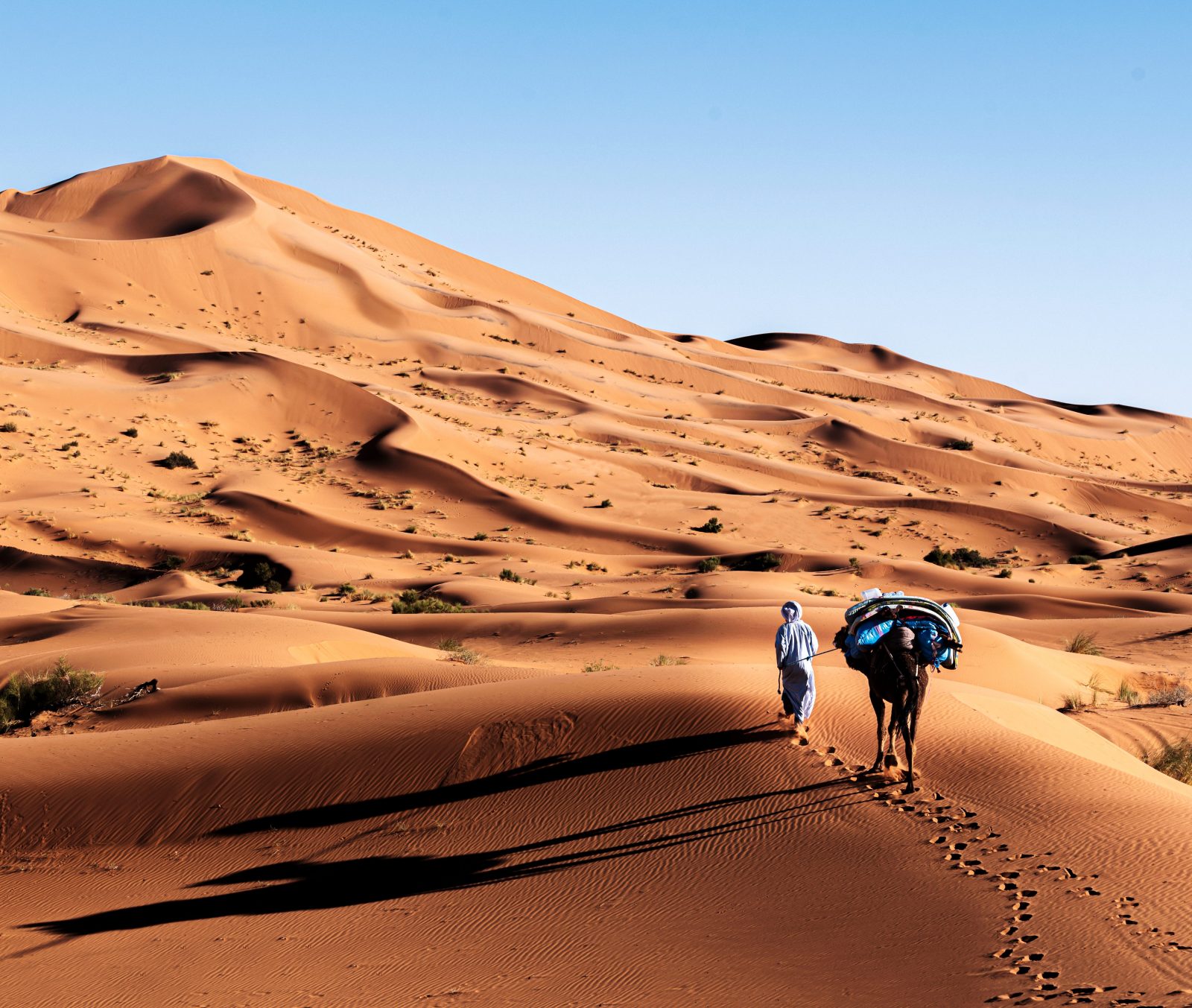
Supporting ethical trekking helps to preserve and sustain the heritage of Morocco’s nomadic communities.
For small nomad families and individual guides, camels represent invaluable assets – living, breathing beings that are treated with the care and respect they deserve. Ethical camel Trekking in Morocco does exist, however, not everyone shares this approach.
The “camel mafia” – men who own hundreds of camels with seemingly little regard for their wellbeing as sentient beings with complex emotions and feelings – represent the dark side of this industry. At Walking with Nomads, we have a clear policy: we do NOT hire camels from these operators.
Read our list of ethical do’s and don’ts in Morocco here
Our Approach to Ethical Camel Trekking: Personalized Care
We exclusively work with camels owned by local nomad families or individual guides affiliated with us. This approach allows us to:
- Know each camel individually
- Monitor their health and wellbeing continuously
- Ensure they receive personalized care based on their specific needs

What Sets Our Ethical Camel Trekking Apart
1. Reduced Workload: More Camels, Less Strain We use more camels per trekker than other companies, ensuring no single camel is overloaded or overworked during desert journeys.
2. Load Carriers, Not Riding Animals The camels in our treks carry equipment and supplies – they are not used for riding, preserving their energy and reducing physical stress.
3. Natural Rest Periods Between treks, our camels enjoy proper rest periods with access to natural grazing areas, allowing them to maintain their natural behaviours and physical health.
4. Proper Nutrition During Treks We carry dates and barley specifically for our camels, feeding them daily during treks. When natural vegetation is abundant after rainfall, they graze freely under supervision.
5. Access to Water We stop at all available water sources during treks, ensuring our camels stay properly hydrated in the desert environment.
6. Comprehensive Medical Care
- Merzouga: Access to professional veterinary services when needed
- M’hamid: Traditional plant and herb remedies passed down through generations
- Olive oil treatments for camels showing signs of fatigue
- Herbal preparations for digestive issues like colic
7. Shade Protection We ensure our camels have access to shade during the intense midday sun and during rest periods between treks.
8. Humane Restraint Methods We use gentle hobbling techniques that allow camels to move around and find food while preventing them from wandering off. At night, we use a single-leg hobble that encourages resting while keeping them close to camp. Forms of hobbling are unavoidable as there are usually no trees to tether them to and they can cover a huge distance in a short time.
9. Soft Equipment We use softer ropes around camels’ heads as “bits” and avoid any equipment that would cause discomfort or injury through the sensitive nose area.
Does it surprise you to know that the camels belonging to the camel mafia are often not provided with these basic care principles?
A Family’s Commitment to Animal Welfare
Our nomad family partners own just five camels, all used exclusively for walking (not riding). These camels are well-fed, with no visible bones, and are rotated between treks to ensure no individual works too many consecutive days without proper rest and freedom.

During the covid, when tourism halted, our camels lived free in the desert. We continued supporting the nomad family to ensure proper care, allowing the camels to roam freely and maintain their natural behaviours. This approach kept them healthy and prevented the foot problems that often afflict camels confined to corrals for extended periods.
Witness the Ostrich Return: Responsible Tourism in Morocco’s M’hamid Desert
Like sheep, they have a shepherd and he was able to ensure that they stayed healthy and were given supplementary food if needed. He would also make sure that they did not eat too much which causes colic. Tragically, many other camels were simply left to die during this period.
Herbs and natural remedies are used with the same success they always have been. For example olive oil is given if the camel seems a bit lazy and slow.
Natural Healthcare and Traditional Wisdom
Our approach combines modern veterinary knowledge with centuries-old nomadic wisdom:
- Olive oil treatments for energy and vitality
- Herbal preparations for digestive health
- Natural grazing under shepherd supervision
- Seasonal management of male camel behaviour during mating season
Male camels that become overly frisky during mating season are either accompanied by experienced guides who understand their behaviour or temporarily separated until they regain self-control. Alpha males, however, are allowed their natural mating behaviours as part of the herd’s natural dynamics.
Protecting Female Camels and Young
We maintain strict policies to protect the most vulnerable members of the camel herd:

- Female camels are never used in tourism, allowing them to roam freely with their babies
- Male calves remain with their mothers until age 3, experiencing natural development
- Gradual training begins at age 3, with slowly increasing loads appropriate to their growing strength
- Full trek participation starts at age 4, when they’re physically and mentally ready
Retirement and Longevity
Our camels work until they’re 16-18 years old but enjoy a long retirement, living freely in the desert for approximately 26 years. While the average camel life expectancy is declining due to reduced plant diversity and climate change, we’re committed to improving conditions through:
- Support for keystone species reintroduction
- Sustainable grazing practices
- Climate-resilient habitat protection
Why Ethical Camel Trekking Matters
Choosing Walking with Nomads means supporting a tourism model that:
- Prioritizes animal welfare over profit
- Preserves traditional nomadic knowledge and practices
- Provides sustainable income for local nomad families
- Maintains natural camel behaviours and social structures
- Protects desert ecosystems through responsible practices
Join us in creating a future where camel trekking respects the ancient bond between humans and these magnificent desert animals, ensuring they thrive for generations to come.
Please note this blog relates to the camels that you will be walking with on one of our multi day desert treks and not the camels you may ride at various desert camps which are not part of our provision. Speak to us separately about this.
Ready to experience ethical camel trekking in Morocco?
Contact Walking with Nomads today to book your responsible desert adventure and support authentic nomadic traditions while ensuring the welfare of these incredible animals.
Walking with Nomads – Where every step honours tradition, and every camel receives the respect they deserve.