
Witness the Ostrich Return: Responsible Tourism in Morocco’s M’hamid Desert
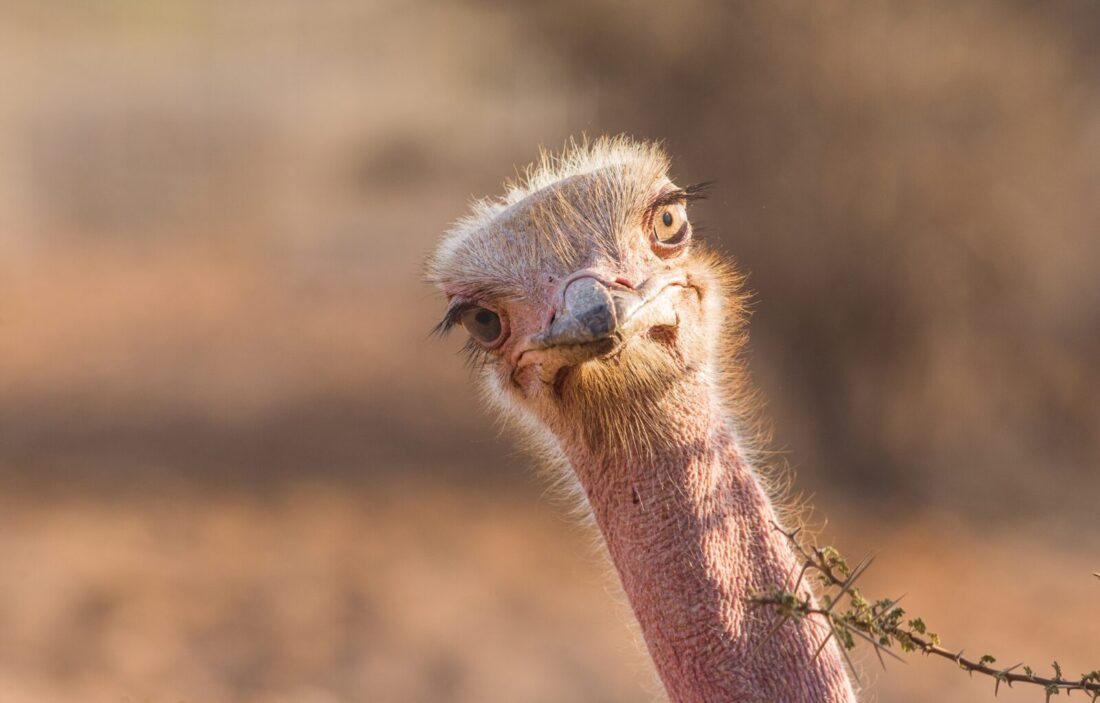
Meet Morocco’s Ostriches: A Conservation Success Story
A desert might appear as a sterile environment – dry, wind-blasted and empty. This is especially true in areas on the edge of the desert where climate change creates advancing desertification.
But this perception couldn’t be further from the truth. A desert, just like any other rural environment, is a complex ecosystem. Despite its harsh conditions, a desert ecosystem is remarkably fragile and delicate.
Historically, nomads and their camels played a vital role in this biosphere. Their seasonal movement created opportunities for life to follow the caravan. From birds to insects, fruit seeds to burnt firewood, footsteps to animal droppings – the travelling caravan enhanced the desert ecosystem through seed dispersal, soil aeration and water hole creation.

The Changing Desert: Impact on Wildlife
So, what happens to this delicate system when nomads are no longer free to roam, when their traditional routes are militarized and their water sources dammed? When the biodiversity of plants growing in the deserts is limited to just a handful of those that once thrived?
With the decline of truly nomadic life came many cascading effects. The life expectancy of the average camel reduced significantly, and many keystone species were wiped out completely. In the M’hamid Desert of Morocco, ostriches once roamed free and wild across the landscape. Then they didn’t.
Historical Context: The Disappearance of Moroccan Ostriches
Over 80 years ago, the North African ostrich (Struthio camelus camelus) – once widespread across the Sahara from Morocco to Egypt – disappeared completely from Morocco.
The loss of ostriches from these regions was apparently not primarily caused by hunting, although hunting has impacted other species. The exact reasons for their extinction remain unclear. Perhaps they lost their food sources, or the summers became too harsh. Perhaps they were inadvertently poisoned, wiped out by a virus, or their eggs were taken for collections.
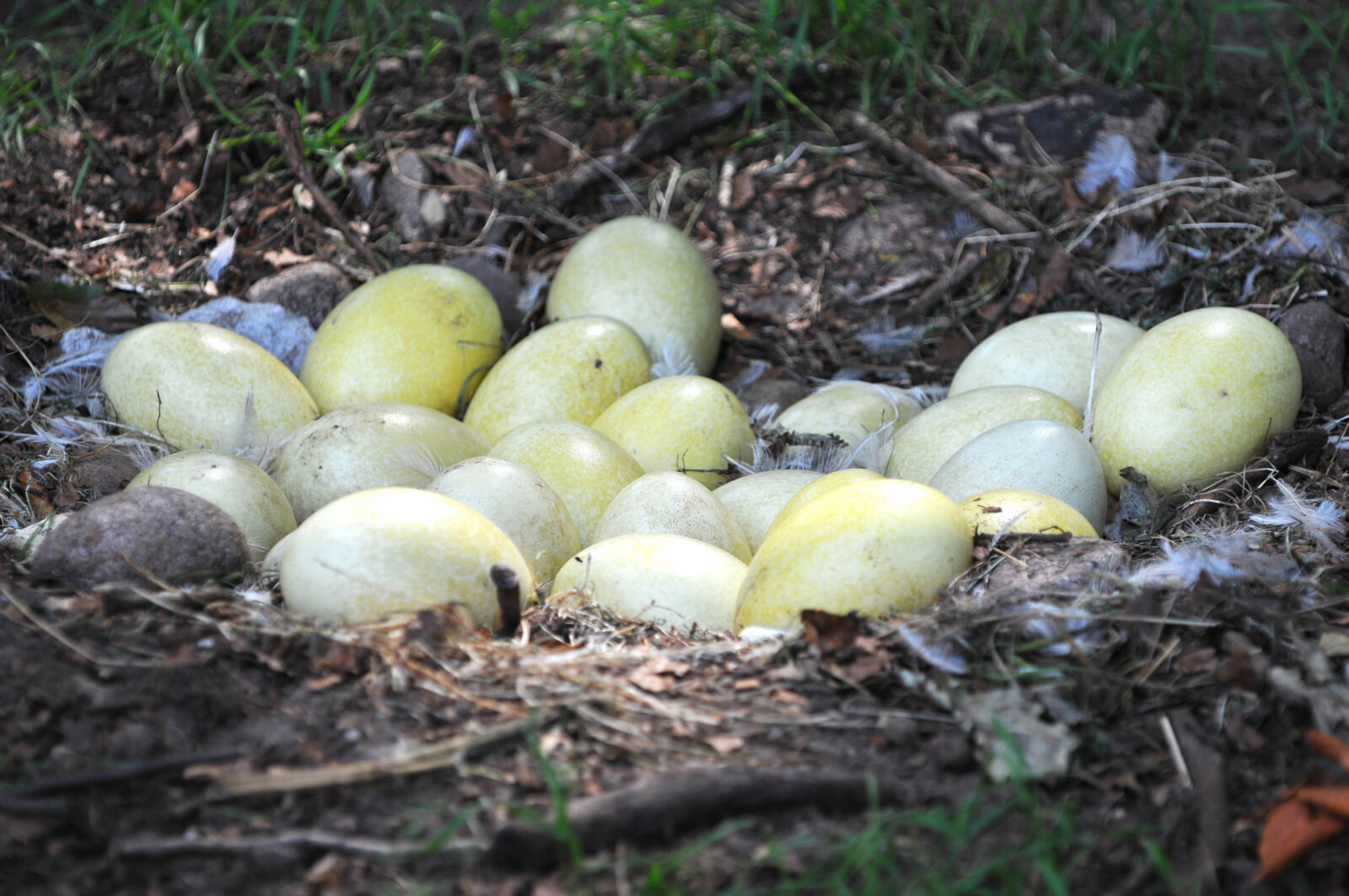
What we do know is that there are parts of the desert which still bear their name – Ostrich Valley, for example. It is considered lucky if you find old ostrich eggshells in the dunes, and these are identified relatively frequently by the people who live here.
The Ecological Importance of Ostriches
Many desert plant species have evolved to be dispersed through ostrich digestion – a fascinating example of co-evolution. Their foot compaction creates small depressions that can capture water and organic matter. Their dust bathing behaviour aerates compacted ground, and they often dig for water in dry riverbeds.
Ostriches consume a variety of desert vegetation, helping to regulate plant communities. They feed on insects, small reptiles and carrion, making them important scavengers that help clean up their environment.
The Ostrich Reintroduction Program
In an effort to restore biodiversity and all the benefits that come with wild creatures roaming free in this vast and stunning landscape, a reintroduction program was launched for ostriches in Morocco.
A few years ago, a joint project was founded – a collaboration between the Moroccan Ministry of Water and Forests and their Qatari partners. Initially, the imported ostriches (we can only hope that this founding stock had high genetic diversity to reduce problems caused by initial inbreeding) were placed in a protected desert area near M’hamid el Ghizlane in an enclosure to assess their ability to thrive in this environment while still being supported and monitored.
First results were very promising, and during the covid years, while tourism in these parts was non-existent for a couple of years, the first batch of birds was released into the wild.
Current Success Story
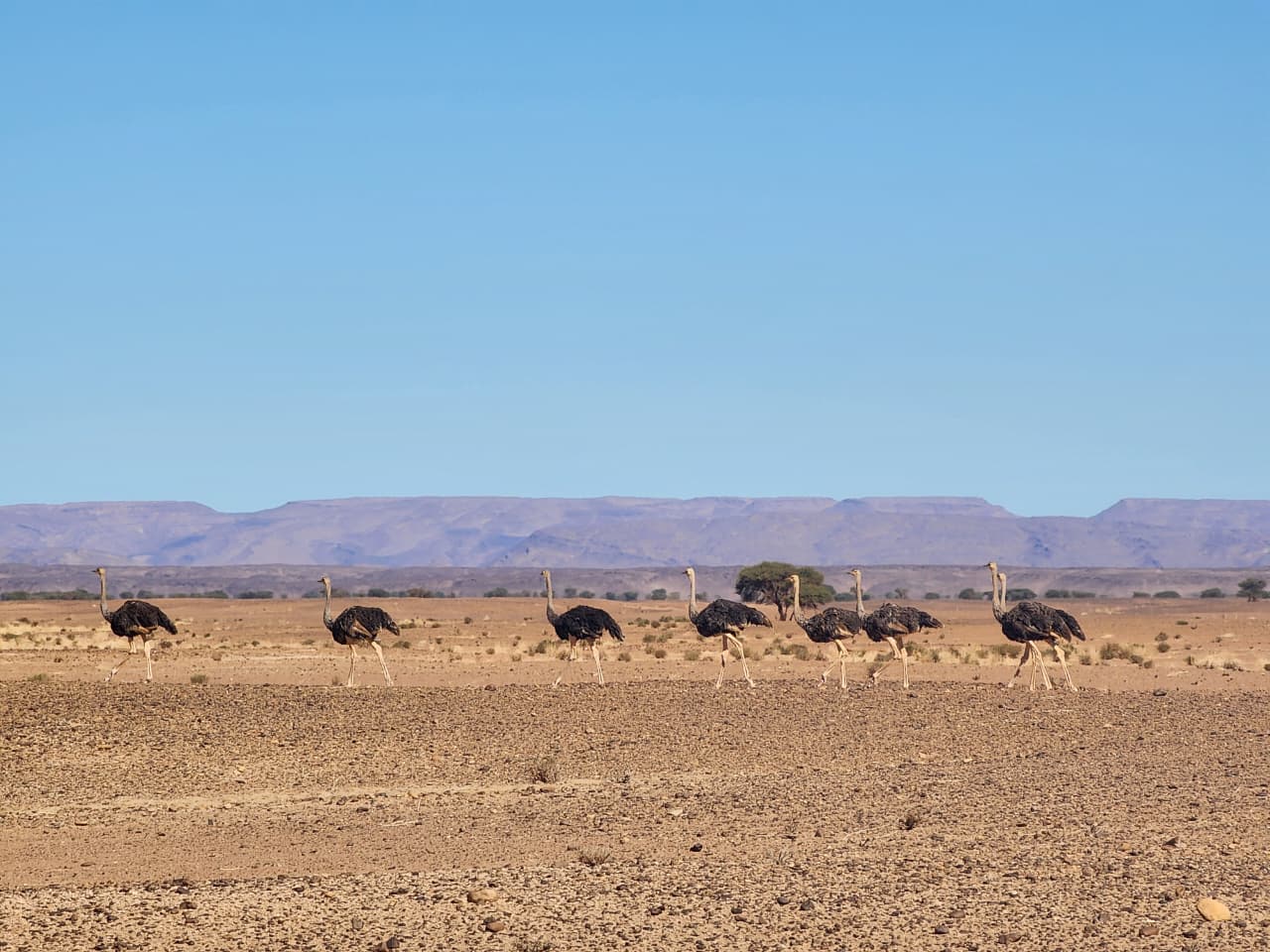
The initial reintroduction of 25 birds in 2018 has now grown to over 120 individuals, with multiple generations thriving in the wild.
The Best 10 Places in M’hamid Desert
There is also an ongoing initiative to extend M’hamid Desert National Park to encompass key ostrich habitat areas.
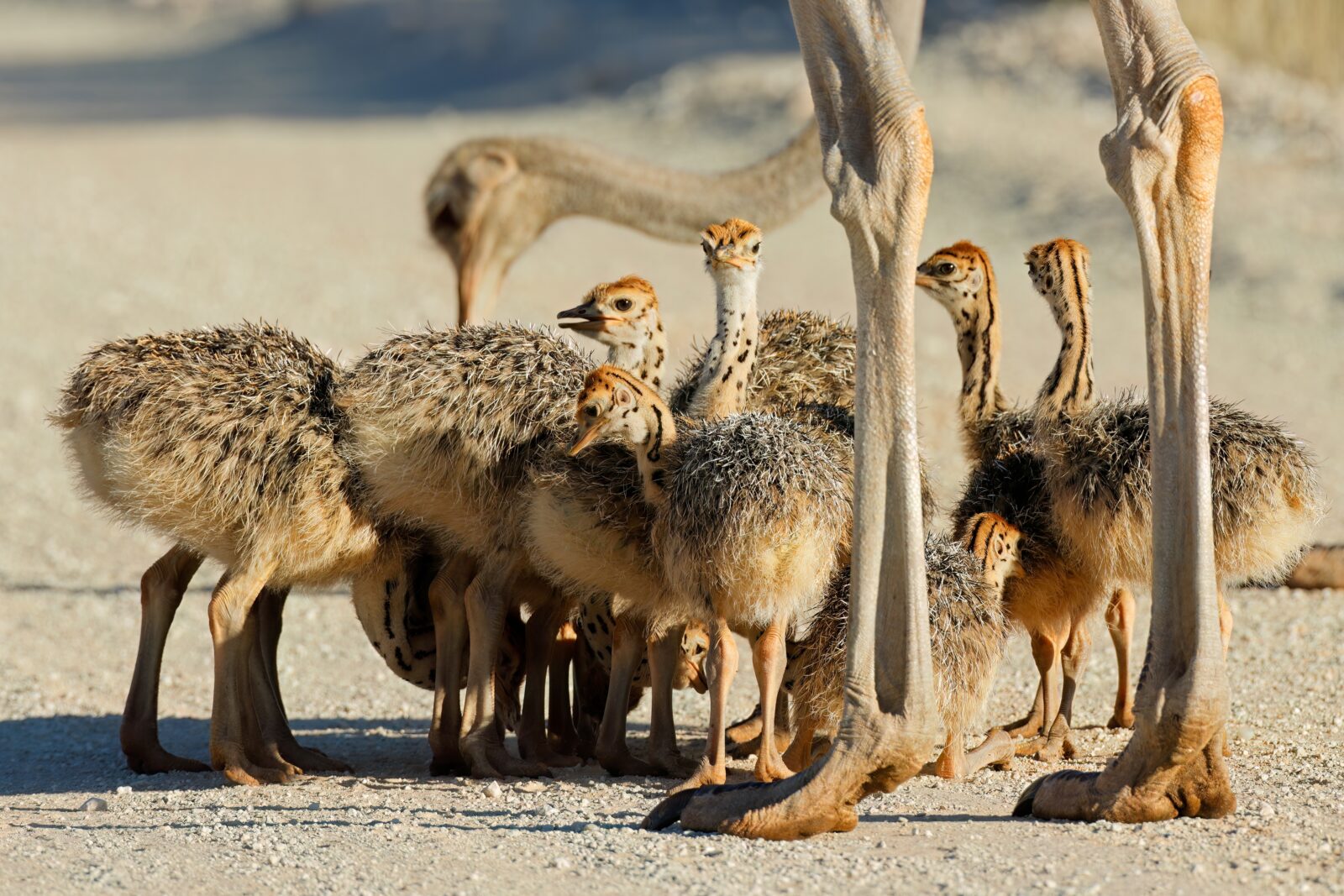
The release has been considered a success as the first wild nest was identified, and one female hatched 31 babies last year, creating a small but growing wild population. The remaining birds are still enclosed while they continue to acclimate, and the journey of the released birds is monitored carefully. This year, one of the females in the enclosure has also hatched several eggs, making this a successful captive breeding program as well.
The North African Ostrich (Struthio camelus camelus)
The ostrich species native to Morocco’s Sahara is the North African ostrich, a subspecies of the common ostrich (Struthio camelus).
Physical Characteristics
These birds are more than impressive, and their strength should never be underestimated:
- Height: Males typically stand 7-9 feet tall, making them the world’s largest birds
- Weight: Males weigh 220-330 lbs; females 200-240 lbs
- Plumage: Males have bold black and white feathers while females are more greyish/brown, allowing for better camouflage while nesting
- Speed: Can run up to 45 mph
They have long necks and powerful legs adapted for running, kicking and desert survival. Their wings are relatively small and although they cannot fly, the wings are still used for courtship displays and balance.
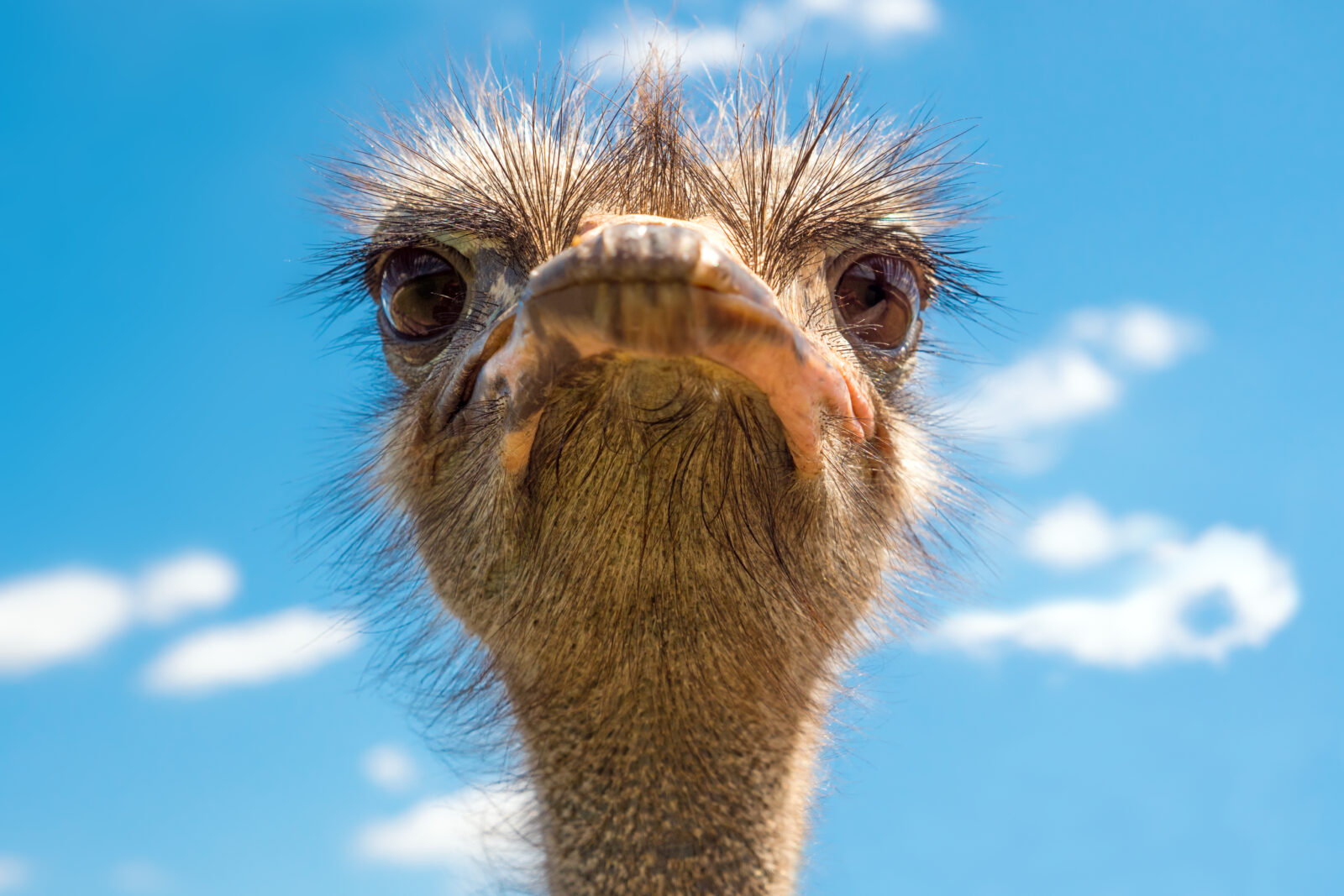
What truly makes ostriches unique is that unlike all other birds, they have only two toes on each foot. They also have the largest eyes of any land animal (5cm diameter), which provides them with excellent vision but also makes them look exceptionally endearing – and this may be their downfall.
Interesting fact: Ostriches sleep with their eyes open and alternate between left and right brain hemisphere in order to rest the other side.
Official Conservation Goals
The official goal is to establish a self-sustaining population of 500+ individuals and develop populations across multiple desert regions. There are plans for ranger programs and sustainable livelihoods to be tied to conservation success.
This is one of North Africa’s most significant conservation success stories – a story of international collaboration and hope.
The Dark Side of Desert Tourism
So, what if tourism ruined all this progress?
As ethical desert tourism providers, we’ve seen some shocking social media footage of the birds being chased and hand-fed. Influencers looking for “action shots” and the tagline “From extinction to Your Instagram.” We’ve also heard stories of Moroccan visitors to the desert trying to capture photos of their children riding an ostrich (and being badly hurt in the process).
This video below shows an injured female ostrich approaching our vehicle looking for food. Much as we would have loved to, we did not get involved.
These actions are already impacting the natural behaviour of the birds, who are now more easily found closer to the town where they are more likely to be fed and to contract viruses. They’re may also develop poor survival skills as a result.
This kind of unconscious tourism is the worst type of tourism, and we can only hope that most people in 2026 understand that chasing and feeding wild animals is NEVER OK.
We hope that if you are reading this, then you care about responsible tourism in Morocco and want to be part of the solution not the problem. Tourism is very important to Morocco, and the ostriches are beneficial to tourism, but let’s just think about how to do that in a sensitive and respectful way.
Ethical Ostrich Viewing Guidelines
Remember, these are critically endangered animals – they are not zoo exhibits. This is a species fighting for survival. Ostriches in natural environments already have alarmingly low survival rates and are very easily disturbed during breeding. If you harass a breeding pair – even inadvertently – they could abandon the nest.
Ethical Travel – Do’s & Don’ts
There is cultural significance of ostriches in Sahrawi and Berber traditions, as well as a hugely important ecological role for ostriches to play in desert ecosystems. The reintroduction program faces enough challenges with funding, rising temperatures, limited shade and water scarcity. Unconscious tourism could tip the whole program into failure.
Here at Walking with Nomads, we respect the intimate understanding the nomadic people have for desert environments and their wildlife. We have much to learn from their spiritual connection to the land and its creatures, which has been nurtured through generations. Desert nomads read animal behaviour and understand the role ostriches have to play. They have relied on this knowledge for their own survival throughout the ages.
The Birds That Fought Back – How We Could Lose Them Again
Ostriches have made an incredible comeback from extinction, but we must not undo that work through careless tourism. The reintroduction program faces enough natural challenges without adding human interference.

Ethical Do’s and Don’ts in Morocco
DO:
- Always use an ethical tourism provider
- Ask specifically about how to view the ostriches ethically
- Ask about your guide’s wildlife training
- Be willing to pay premium prices for guides who enforce ethical practices
- Remember that responsible tourism in Morocco creates local incentives for conservation
DON’T:
- Chase ostriches in vehicles or on foot
- Feed them
- Touch them
- Get close to nesting areas or stress breeding pairs
- Create dependency in any way
- If they change direction because of you – you are too close
- Let children get too close – these birds can attack
The Future of Ostrich Conservation in Morocco
There is a lot of excitement about the ostriches, and it is having a positive effect on tourism. Not only from foreigners but from Moroccans who are bringing their families and children to see these amazing birds. Having these birds back in the desert where they belong feels very right.
However, there is no natural predator here, and they can breed very fast, so where this program is going we can’t be sure. Even for an ostrich, desert life is tough, and many will succumb to the weather, which may be enough to keep numbers under control. Time will tell, but while we watch and wait, can we do so consciously and with sensitivity?
How You Can Help: Responsible Tourism in Morocco
If you are on a desert trek and your guides offer or encourage you to chase or feed these beautiful birds, can you step back? Can you ask your guides in advance of your visit what their policies are regarding the ostriches? Can you be the right kind of tourist – the type that respects the natural world and observes without interference?
At Walking with Nomads, we don’t just show you the desert, we help you become part of its protection. Responsible tourism in Morocco matters, and you have a role to play in this conservation story.
So remember, the question isn’t whether you can get close. It’s whether you can stay back.
Choose to witness, not disturb – The ostriches are depending on you.